Some heated debated we had lately in less formal PIS meetings revolved about the question, how trustworthy governments are and what they would or would not do to their people.
As an anarchist, I tend not to trust governments, and as Media&Communication student I learned already a lot about the quality of news.
Chomsky's propaganda model of the media provides a scientific account how media coverage was manipulated in several cases to justify wars. Understanding this model helps determining how much factual background the daily news yarn owns.
However, I noticed an apparent lack of critical thinking with some fellow debaters, which seem to assume benevolent governments axiomatically.
In my political science lectures I learned about the concept of the post-911 world, although I managed to score a H2A for an essay that claimed that 9/11 has hardly changed anything in global politics.
Nevertheless, 911 has been the prime excuse to illegally invade countries and to massively restrict civil rights. And whenever some myth are blown away, like the existence of WMDs in Iraq, the responsible actors claim to have been wrongly informed.
Of course, admitting outright lies means political suicide, even though the voting sheep don't care too much about the integrity of their rulers.
Here is an account about the knowledge available to British MPs before they send their soldier to die, spread death, torture and devastation in Iraq, or, to use the Unspeak terms of the media propaganda, to liberate Iraq and spread freedom and democracy.
The lies of the American president are legion, the UK government knew how harmless Iraq was, and Tony Blair spun the same lies than his American collegue. I'm sure, John Howard is innocent, maybe a bit too gullible, and sent Australian soldiers in the battle just to protect his homeland.
Monday, 18 December 2006


Friday, 15 December 2006
Undergrad Reflections
A quick bit of auto-trumpet on my part. After six years at Unimelb, next Wednesday I finally graduate. To mark my transition from student to ex-student, I'm writing my Undergrad Reflection on my modest little blog. You might like to have a read, and better yet, leave a comment.
Here 'tis.
Here 'tis.
Wednesday, 6 December 2006
Just some short wrap ups
The PIS is alive and kicking, and even though only four of us remained on topic, our noise level nearly emptied the pub. A cornucopia of ideas spilled across the room, which should probably inspire some articles for the next AAP.
But to keep it up short, I just like to throw in some missing links. One of our topic was Depleted Uranium, an environmental hazard and toxic legacy that is increasingly used all over this planet.
While taking about war segueing into the evil overlords comes natural. Ari had not heard about the Bilderberg Group, which might come closest to be something like the secret rulers of this planet. I started investigating the mysterious group myself, and tried to research the participants. It's definitely work in progress, yet global politics and events appear already in a different light.
The last referral is to the background of ubiquitous terror theme. Somehow, links to Google Video seem not to work here, so simply search for terrorstorm and enjoy an alternative analysis of events of global events.
And the club website got a small makeover to create a bit more of corporate identity for our advertising efforts. Hope you like it, because you have live with it :)
But to keep it up short, I just like to throw in some missing links. One of our topic was Depleted Uranium, an environmental hazard and toxic legacy that is increasingly used all over this planet.
While taking about war segueing into the evil overlords comes natural. Ari had not heard about the Bilderberg Group, which might come closest to be something like the secret rulers of this planet. I started investigating the mysterious group myself, and tried to research the participants. It's definitely work in progress, yet global politics and events appear already in a different light.
The last referral is to the background of ubiquitous terror theme. Somehow, links to Google Video seem not to work here, so simply search for terrorstorm and enjoy an alternative analysis of events of global events.
And the club website got a small makeover to create a bit more of corporate identity for our advertising efforts. Hope you like it, because you have live with it :)
Tuesday, 28 November 2006
Four More Years
There are two ways for people who care about state elections to spend polling night. You can watch the numbers roll on TV while blogging, trying to beat the professionals to some unique insight on the unfolding drama. Or you can watch them in a pub drinking beer with fellow politics wonks. Going with option 2 proved an inspired choice, since it helped break the blogging drought I've had since the last legislative horse-race. So here I am, competing with a hundred other desktop psephologists to dissect Victoria's Choice.
It's not the thrilling stuff of US mid-terms. Granted, 'modest swing to the Liberals' doesn't have the same ring as 'Republicans get their asses handed to them on a plate'. But I'd hoped for something more than a mirror image of the 2004 federal election, with the opposition kept two cycles from a realistic bid and the incumbents left with a wafer-thin majority in the upper house. The foretold Day of the Minor Parties was a non-starter, with the Greens failing to come through, the Democrats consigned to oblivion and People Power nowhere in sight. Family First's relatively respectable polling just shows that other groups are waking up to the 'values' niche that Howard has been working for a decade. All told, the LegCo results were an uninspired outcome for the biggest constitutional shakeup in the state's history. Instead this election's 'historic' nature was pinned to it being the second time Victorian Labor has won three consecutive terms. My heart beats faster...
More noteworthy was Labor's ability to hold regional Victoria, or rather the Libs' inability to gain traction there. It's the latest instance of a much-remarked trend that sees country voters drifting from the traditional conservative parties, while battling suburbia becomes Liberal heartland. The driving factor? Reaction against change - neoliberal economics on one side, multiculturalism and 'political correctness' on the other. You want tariffs and subsidised services? Don't vote Coalition. You want government that will roll back black-armband history and lock up the Muslims? Then do.
Taking this further, perhaps the state-federal divide really is hardening into a fixed feature of the nation's political landscape. The major parties have staked out their territory, and a party trying to climb the other hill has to struggle either against urban masses fearful of their identity and lifestyle being eaten away by globalisation, or a hinterland resentful at being cut adrift by coastal metropolises increasingly linked to the outside world. It can't be coincidence that in the face of the Bracks' government's failures, country Victorians confirmed their 1999 decision to throw out the party which sank tax dollars into Melbourne landmarks pitched at city sophisticates and tourists.
Admittedly the parties aren't helping themselves, with their penchant for eleventh-hour dumpings of seasoned leaders in favour of glamorous neophytes (think Quinn-Flegg and Beazley-Latham). Yet another lesson driven home on Saturday; Baillieu's song-and-dance routine was fun for a while, but it proved what US Republicans learned earlier this month - dominating the campaign doesn't translate into votes. It certainly can't blot out this litany of errors:
- Refusing to shave your share portfolio, when your nickname is already the Toff from Toorak.
- Refusing to discuss a coalition that your party needs to govern.
- Promising to scrap the state's renewable energy scheme while the federal Libs scramble to deal, or be seen to deal, with global warming.
- Promising a river-killing dam, in lieu of said renewable energy scheme.
- Promising free public transport for the age-group that is so pleasant to be around on trains and trams.
- Trying to outbid an incumbent, in-surplus government on tax cuts.
- $285 million costing holes.
etc.
The Libs definitely seem to be getting the worse of the talent drought, having turned over management in 7 of 8 states and territories within the past half-year (all 8, if you go back a full year). Coming so soon after the Queensland rout, Saturday's outcome and the Bracks-Costello sniping that followed shows what to expect from Australian politics over the next decade, assuming that Canberra and the High Court don't bludgeon the states into irrelevance: federal-state jousting as a substitute for policy differentiation. It might be a healthy balance, but for COAG's inability to get work done on health, water or indeed anything.
Small wonder that the only cheering in the James Squire on Saturday night was for 'Four More Beers!'.
It's not the thrilling stuff of US mid-terms. Granted, 'modest swing to the Liberals' doesn't have the same ring as 'Republicans get their asses handed to them on a plate'. But I'd hoped for something more than a mirror image of the 2004 federal election, with the opposition kept two cycles from a realistic bid and the incumbents left with a wafer-thin majority in the upper house. The foretold Day of the Minor Parties was a non-starter, with the Greens failing to come through, the Democrats consigned to oblivion and People Power nowhere in sight. Family First's relatively respectable polling just shows that other groups are waking up to the 'values' niche that Howard has been working for a decade. All told, the LegCo results were an uninspired outcome for the biggest constitutional shakeup in the state's history. Instead this election's 'historic' nature was pinned to it being the second time Victorian Labor has won three consecutive terms. My heart beats faster...
More noteworthy was Labor's ability to hold regional Victoria, or rather the Libs' inability to gain traction there. It's the latest instance of a much-remarked trend that sees country voters drifting from the traditional conservative parties, while battling suburbia becomes Liberal heartland. The driving factor? Reaction against change - neoliberal economics on one side, multiculturalism and 'political correctness' on the other. You want tariffs and subsidised services? Don't vote Coalition. You want government that will roll back black-armband history and lock up the Muslims? Then do.
Taking this further, perhaps the state-federal divide really is hardening into a fixed feature of the nation's political landscape. The major parties have staked out their territory, and a party trying to climb the other hill has to struggle either against urban masses fearful of their identity and lifestyle being eaten away by globalisation, or a hinterland resentful at being cut adrift by coastal metropolises increasingly linked to the outside world. It can't be coincidence that in the face of the Bracks' government's failures, country Victorians confirmed their 1999 decision to throw out the party which sank tax dollars into Melbourne landmarks pitched at city sophisticates and tourists.
Admittedly the parties aren't helping themselves, with their penchant for eleventh-hour dumpings of seasoned leaders in favour of glamorous neophytes (think Quinn-Flegg and Beazley-Latham). Yet another lesson driven home on Saturday; Baillieu's song-and-dance routine was fun for a while, but it proved what US Republicans learned earlier this month - dominating the campaign doesn't translate into votes. It certainly can't blot out this litany of errors:
- Refusing to shave your share portfolio, when your nickname is already the Toff from Toorak.
- Refusing to discuss a coalition that your party needs to govern.
- Promising to scrap the state's renewable energy scheme while the federal Libs scramble to deal, or be seen to deal, with global warming.
- Promising a river-killing dam, in lieu of said renewable energy scheme.
- Promising free public transport for the age-group that is so pleasant to be around on trains and trams.
- Trying to outbid an incumbent, in-surplus government on tax cuts.
- $285 million costing holes.
etc.
The Libs definitely seem to be getting the worse of the talent drought, having turned over management in 7 of 8 states and territories within the past half-year (all 8, if you go back a full year). Coming so soon after the Queensland rout, Saturday's outcome and the Bracks-Costello sniping that followed shows what to expect from Australian politics over the next decade, assuming that Canberra and the High Court don't bludgeon the states into irrelevance: federal-state jousting as a substitute for policy differentiation. It might be a healthy balance, but for COAG's inability to get work done on health, water or indeed anything.
Small wonder that the only cheering in the James Squire on Saturday night was for 'Four More Beers!'.
Monday, 6 November 2006
Like Sheep Among Wolves
The GOP ascendancy has spawned an anthropological smorgasboard on the strange creatures who populate the American right. The latest offering is Andrew Denton's God On My Side, in which Australia's least-flappable journalist tours an NRB convention to discover how these infamous Evangelicals really think. After sitting through this 90-minute parade of nice people explaining with absolute conviction that we're living in the End Times, that Islam is the devil's counterfeit and that separation of Church and State is not part of America's constitutional heritage, born-and-bred progressives may think that Denton has done Al Gore one better on the 'scariest film you'll see this year'.
Having been raised in an offshoot of this culture, I didn't learn much from Denton's suave but somewhat bland feature-doc. I would have liked to see more time spent on the relationship between faith and politics, which is what really concerns those who aren't offended by what evangelicals believe per se but do care once it starts affecting the rest of us. Australians haven't yet had to deal with drives to bring creationism into classrooms or amend state constitutions to ban gay marriage. But with federal money earmarked for chaplains in state schools and a church-based party holding the senate's balance of power, we ought to start thinking about the use of worldly power to advance God's Kingdom.
It's surprising that Denton didn't push his subjects on this question, given the mounting evidence that faith and politics haven't mixed well under the evangelical presidency. David Kuo's expose of the GOP party machine's real attitude towards its Christian base has been followed by scandal upon scandal among the leaders pledged bring morality back into government. Throw in the run-of-the-mill misgovernance that has pissed off the non faith-based community, and one would expect a hint of disillusionment on the religious right with the Bush administration and the Republican congress.
Indeed, one can discern in the polls a growing sense among 'moral conservatives' that they've been led by the nose - that the Republicans of '94 and the 'Compassionate Conservative' of 2000 have proved devoted to nothing more than the political (occasionally sexual) bottomline. Concerns have been raised that Christ's elect have gone sheeplike into the wolf-infested den of politics without heeding His caveat, viz. to be shrewd as snakes while doing so (Matthew 10:16 - as said, I was raised on the Word). We're now hearing the old refrain that the Church's lack of spiritual grounding has led it to follow wolves in sheep's clothing, who talk the talk of values while walking the political lowroad, which currently involves painting Democrats as pro-paedophile or as miscegenating Playboys.
So the average Republican strategist has reason to fear David Kuo's call for Christians to take a 'sabbatical from politics'. One can picture their party's base walking out through the various -Gates (Abramoff, Foley, Haggard) that have opened in the GOP edifice over the past year. The danger is not that these people will morph into Democrats on Tuesday but that they won't turn out to vote Republican, at least not in the numbers that clinched victory in 2000 and 2004.
And yet, 48 hours out from D-Day, word has it that the Master Strategist sleeps soundly. You don't have to be Karl Rove, or to indulge in conspiracy theories about his perfidy, to understand why the GOP can still depend on the constituency that Bush staffers reportedly mock with four-letter expletives. It's fun to watch partisans of the 'moral majority' tie themselves in knots defending each new impropriety - to the point of extolling hypocrisy as a virtue - but at the end of the day the values crowd is unlikely to accept the alternative, whatever the intellectual arguments. The tribal character of US politics is what got the GOP into power and it's the only thing, under current circumstances, that will keep them there. Just listen to the House Speaker, he of the cybersex-coverup:
It's surprising that Denton didn't push his subjects on this question, given the mounting evidence that faith and politics haven't mixed well under the evangelical presidency. David Kuo's expose of the GOP party machine's real attitude towards its Christian base has been followed by scandal upon scandal among the leaders pledged bring morality back into government. Throw in the run-of-the-mill misgovernance that has pissed off the non faith-based community, and one would expect a hint of disillusionment on the religious right with the Bush administration and the Republican congress.
Indeed, one can discern in the polls a growing sense among 'moral conservatives' that they've been led by the nose - that the Republicans of '94 and the 'Compassionate Conservative' of 2000 have proved devoted to nothing more than the political (occasionally sexual) bottomline. Concerns have been raised that Christ's elect have gone sheeplike into the wolf-infested den of politics without heeding His caveat, viz. to be shrewd as snakes while doing so (Matthew 10:16 - as said, I was raised on the Word). We're now hearing the old refrain that the Church's lack of spiritual grounding has led it to follow wolves in sheep's clothing, who talk the talk of values while walking the political lowroad, which currently involves painting Democrats as pro-paedophile or as miscegenating Playboys.
So the average Republican strategist has reason to fear David Kuo's call for Christians to take a 'sabbatical from politics'. One can picture their party's base walking out through the various -Gates (Abramoff, Foley, Haggard) that have opened in the GOP edifice over the past year. The danger is not that these people will morph into Democrats on Tuesday but that they won't turn out to vote Republican, at least not in the numbers that clinched victory in 2000 and 2004.
And yet, 48 hours out from D-Day, word has it that the Master Strategist sleeps soundly. You don't have to be Karl Rove, or to indulge in conspiracy theories about his perfidy, to understand why the GOP can still depend on the constituency that Bush staffers reportedly mock with four-letter expletives. It's fun to watch partisans of the 'moral majority' tie themselves in knots defending each new impropriety - to the point of extolling hypocrisy as a virtue - but at the end of the day the values crowd is unlikely to accept the alternative, whatever the intellectual arguments. The tribal character of US politics is what got the GOP into power and it's the only thing, under current circumstances, that will keep them there. Just listen to the House Speaker, he of the cybersex-coverup:
"If I fold up my tent and leave," Dennis Hastert [said], "then where does that leave us? If the Democrats sweep, then we'd have no ability to fight back and get our message out."
It's depressing that this bankrupt, purely partisan appeal may underpin another Republican victory. But that's the only way by which America's evangelicals will stem the tide of other-people's-choices threatening their self-conception, and fight their war against the judiciary and sundry other organs of atheistic government, notwithstanding all those Biblical verses about obeying authorities that the Lord puts over you and rendering unto Caesar what is Caesar's. To paraphrase the elderly Texan speaking to a polite but mystified Andrew Denton, they know what they know what they know, and no number of scandals or mismanaged wars is going to change that.
So while half of America will treat Tuesday's vote as a referendum on Iraq, the other half is likely to view it as just another battle for the soul of God's own country (did you think that was New Zealand?). With the row over Family First preferences still smouldering, Australians could observe and learn a thing or two. But in true national character, most of us will be watching the races instead.
Postscript
Of course, not everyone approves of how we Aussies spend the first Tuesday in November.
(cross-posted)
Tuesday, 31 October 2006
A Fireside Blog Post From Your PIS President
My dear friends,
In a mere eight sleeps, it will be the politically interested Melbourne Uni student's version of Christmas Day: the United States elections. All of the House of Representatives and one third of the Senate is up for the grabs, and George W Bush's Republican Party is bracing itself for disaster. After Wednesday week, the Democratic Party may have the capacity to block Bush administration legislation and to launch investigations into Iraq, Katrina, and so on.
The Political Interest Society is offering election coverage on Foxtel, good company, alcohol, and food all in the one place…
The PIS Watches The American Elections
When: Wednesday, November 8th, from 12 midday onwards
Where: James Squire Brewhouse, Cnr Little Collins and 115 Russell Street, CBD
Now, I realise that it is the official beginning of exam season for most people in a tad less than ten sleeps (not me, however: I am on "working vacation" at my Eltham ranch, clearing brush, playing catch with my two-headed dog, Fala, and enjoying being deferred). But invariably, you will all need a break at some point: Wednesday week is as good a day as any. And from an educational standpoint, I guarantee you'll learn more from watching BBC World than you will studying for some bloody Derek McDougall subject.
Hope to see you there,
Yours not-up-for-re-election-this-November,
President Dave M Fettling
In a mere eight sleeps, it will be the politically interested Melbourne Uni student's version of Christmas Day: the United States elections. All of the House of Representatives and one third of the Senate is up for the grabs, and George W Bush's Republican Party is bracing itself for disaster. After Wednesday week, the Democratic Party may have the capacity to block Bush administration legislation and to launch investigations into Iraq, Katrina, and so on.
The Political Interest Society is offering election coverage on Foxtel, good company, alcohol, and food all in the one place…
The PIS Watches The American Elections
When: Wednesday, November 8th, from 12 midday onwards
Where: James Squire Brewhouse, Cnr Little Collins and 115 Russell Street, CBD
Now, I realise that it is the official beginning of exam season for most people in a tad less than ten sleeps (not me, however: I am on "working vacation" at my Eltham ranch, clearing brush, playing catch with my two-headed dog, Fala, and enjoying being deferred). But invariably, you will all need a break at some point: Wednesday week is as good a day as any. And from an educational standpoint, I guarantee you'll learn more from watching BBC World than you will studying for some bloody Derek McDougall subject.
Hope to see you there,
Yours not-up-for-re-election-this-November,
President Dave M Fettling
Thursday, 12 October 2006
How did the towers collapse?
I did something probably considered to be politically incorrect, which might happen easier during the after hours of club meetings.
I aired my some questions about 911, and was thus very fast classified as conspiracy nut. Stephen had at least the fairness to refer me to wikipedia to find out why how the WTC tower collapse, and why and how WTC 7 collapsed.
In fact, there is a wikipedia entry for the Collapse of the World Trade Center, but it doesn't answer the question I raised.
According to the NIST report, which is part of the 9/11 commission report, it took WTC 1 and 2 ten resp. eleven seconds to collapse. This is about the time it takes for an object to drop from the top of each tower to the ground, obstructed in its path just by the resistance of air.
Physically seen, this implies that about 70 floors, which carried uninterfered the same load they used to carry since the buildings were constructed, had effectively the same resistance like thin air.
One of the basic laws of thermodynamics is called conservation of energy. You need energy to transform a physical object, this means energy is transformed while the WTC is obliterated to bits.
The only energy source available, however is gravity. Given just air resistance, it'll take 11 seconds for the top of the tower to hit the ground. The destruction of the lower floors requires energy, and would therefore transform the gravitational energy. The collapse would have to be slowed down.
However, we know that the more than 70 floors build by steel, filled with desks, chairs, computers, cabinets, maybe even safes, posed no resistance at all to the collapse of the building.
The account given by NIST offers no explanation for the speed in which the Twin Towers collapsed, and it avoids offering any theory at all when it comes to WTC7.
WTC7 collapsed on the afternoon of 911, and too smaller fires and no apparent impact from debris were visible. This 47 storey building collapsed in less than 7 seconds, without any plane hitting it.
Today a plane hit a NY building, and even though you had 50 storey building, hit by a plane and with raging fires, it didn't collapse. WTC7, not hit by a plane, with less raging fires, fell neatly in its footprint, in less than 7 seconds.
I'm not too sure about the amount of science students in the PIS, but anyone with sufficient background knowledge can earn 1 Million US$ by proving the feasability of the theories in the NIST report.
However, the only conclusion I draw from the knowledge that the 911 commission report told some bold lies is that a more thorough investigation about this event is required.
It took the Bush regime more than a year to start any investigation of 911, and before the report was published two wars were already waged. I could make up a nice conspiracy theory up for you, but I'm only interested how the building collapsed.
The available evidence, as for example scrutinized by Scholars for truth, suggests strongly the use of explosives to bring down the building. This surely raises a bunch of other questions, and none of them offers to many reassuring answers.
However, I don't mind if you prefer labelling me as a conspiracy nut rather than trying to convince me (or make up your mind). Yet, the last tyranny on German soil ended just in 1989, and a way too familiar stench is wafting over from the US.
But I'm really curious if you manage to come up with an explanation, how the buildings collapsed so fast without the use of explosives.
I aired my some questions about 911, and was thus very fast classified as conspiracy nut. Stephen had at least the fairness to refer me to wikipedia to find out why how the WTC tower collapse, and why and how WTC 7 collapsed.
In fact, there is a wikipedia entry for the Collapse of the World Trade Center, but it doesn't answer the question I raised.
According to the NIST report, which is part of the 9/11 commission report, it took WTC 1 and 2 ten resp. eleven seconds to collapse. This is about the time it takes for an object to drop from the top of each tower to the ground, obstructed in its path just by the resistance of air.
Physically seen, this implies that about 70 floors, which carried uninterfered the same load they used to carry since the buildings were constructed, had effectively the same resistance like thin air.
One of the basic laws of thermodynamics is called conservation of energy. You need energy to transform a physical object, this means energy is transformed while the WTC is obliterated to bits.
The only energy source available, however is gravity. Given just air resistance, it'll take 11 seconds for the top of the tower to hit the ground. The destruction of the lower floors requires energy, and would therefore transform the gravitational energy. The collapse would have to be slowed down.
However, we know that the more than 70 floors build by steel, filled with desks, chairs, computers, cabinets, maybe even safes, posed no resistance at all to the collapse of the building.
The account given by NIST offers no explanation for the speed in which the Twin Towers collapsed, and it avoids offering any theory at all when it comes to WTC7.
WTC7 collapsed on the afternoon of 911, and too smaller fires and no apparent impact from debris were visible. This 47 storey building collapsed in less than 7 seconds, without any plane hitting it.
Today a plane hit a NY building, and even though you had 50 storey building, hit by a plane and with raging fires, it didn't collapse. WTC7, not hit by a plane, with less raging fires, fell neatly in its footprint, in less than 7 seconds.
I'm not too sure about the amount of science students in the PIS, but anyone with sufficient background knowledge can earn 1 Million US$ by proving the feasability of the theories in the NIST report.
However, the only conclusion I draw from the knowledge that the 911 commission report told some bold lies is that a more thorough investigation about this event is required.
It took the Bush regime more than a year to start any investigation of 911, and before the report was published two wars were already waged. I could make up a nice conspiracy theory up for you, but I'm only interested how the building collapsed.
The available evidence, as for example scrutinized by Scholars for truth, suggests strongly the use of explosives to bring down the building. This surely raises a bunch of other questions, and none of them offers to many reassuring answers.
However, I don't mind if you prefer labelling me as a conspiracy nut rather than trying to convince me (or make up your mind). Yet, the last tyranny on German soil ended just in 1989, and a way too familiar stench is wafting over from the US.
But I'm really curious if you manage to come up with an explanation, how the buildings collapsed so fast without the use of explosives.
Monday, 2 October 2006
Enemy at the Woodward-Gate
Cross-posted.
______________________________
It's a rare journalist who can claim credit for two national scandals, the second of which carries his name. Five weeks out from Mid-Terms and with the ink on the leaked NIE barely dry, Hurricane Woodward is shaking the administration to its roots, despite the Bush PR team's best efforts to look blase and spin furiously at the same time. The book has already sold a million copies on the promise of insider gossip, some of it old meat (George believes in himself more than good advice), some red (everyone from the generals to Laura wanted Rumsfeld fired). With Baghdad under lockdown and Condi asking the Saudis for help, Bush needs some inspiration from the last successful Republican war president, or at least a stoic quip - 'if there is a place worse than Hell, I am in it'.
The difference between Bush and Lincoln in hell, of course, is that Bush put himself there. As far as one can tell from media blitz on a yet-unpublished book, State of Denial confirms what I've suggested is Bush's flaw as president -
It's bad enough that the US is being run by a man convinced his job is to lead and not think, at least not when things start going wrong. But when he creates an institutional culture in which no one else wants to think, you end up with self-muzzling, dysfunctional government. No one in this 'MBA presidency' seems to do anything under delegation, whether managing hurricane relief or the War On Terror. Perhaps the most disturbing of Woodward's insights is into how the generals running the mightiest military machine in history ended up too cowed to do their jobs -
Put these tidbits with a raft of other anectodal evidence - like Eric Shinseki's treatment - and you're left with an eerie image of Stalin purging independent-minded generals from the Red Army before June 1941. Stalin took about six months to recognise his errors, twelve to put his house in order and another thirty or so to win the war. Bush is approaching the same length of time and hasn't yet resolved to sack the guy whom everyone in the know seems to blame for Iraq.
Inevitably, a book that shows Bush improvising war and dissembling to the public has brought out the lynch mob. When Woodward wrote nice things about the White House, he was feted by everyone right of Ted Kennedy and Atrios. Now he has an 'agenda', just like the 'agenda' to leak the NIE and the 'agenda' of the ex-Bush officials whom Woodward interviewed. At the next press conference, someone should ask Tony Snow how many ex-Clinton officials have come forward to denounce their administration's incompetence. Not that it would make much difference. By this point, I doubt the Bush cheersquad will ever accept that smoke means fire and not just a reason to close your eyes.
After all, the administration has been coming clean over Iraq, albeit by lowering the bar for communication -
______________________________
It's a rare journalist who can claim credit for two national scandals, the second of which carries his name. Five weeks out from Mid-Terms and with the ink on the leaked NIE barely dry, Hurricane Woodward is shaking the administration to its roots, despite the Bush PR team's best efforts to look blase and spin furiously at the same time. The book has already sold a million copies on the promise of insider gossip, some of it old meat (George believes in himself more than good advice), some red (everyone from the generals to Laura wanted Rumsfeld fired). With Baghdad under lockdown and Condi asking the Saudis for help, Bush needs some inspiration from the last successful Republican war president, or at least a stoic quip - 'if there is a place worse than Hell, I am in it'.
The difference between Bush and Lincoln in hell, of course, is that Bush put himself there. As far as one can tell from media blitz on a yet-unpublished book, State of Denial confirms what I've suggested is Bush's flaw as president -
John McCain was asked whether Mr Bush had ever asked him for his views on Iraq. "No, no, he hasn't... As a matter of fact, he's not intellectually curious.'
It's bad enough that the US is being run by a man convinced his job is to lead and not think, at least not when things start going wrong. But when he creates an institutional culture in which no one else wants to think, you end up with self-muzzling, dysfunctional government. No one in this 'MBA presidency' seems to do anything under delegation, whether managing hurricane relief or the War On Terror. Perhaps the most disturbing of Woodward's insights is into how the generals running the mightiest military machine in history ended up too cowed to do their jobs -
Abizaid's old friends were worried sick that another Vietnam or anything that looked like Vietnam would be the end of the volunteer army. What's the strategy for winning? they pressed him.
"That's not my job," Abizaid said.
No, it is part of your job, they insisted.
No, Abizaid said. Articulating strategy belonged to others.
Put these tidbits with a raft of other anectodal evidence - like Eric Shinseki's treatment - and you're left with an eerie image of Stalin purging independent-minded generals from the Red Army before June 1941. Stalin took about six months to recognise his errors, twelve to put his house in order and another thirty or so to win the war. Bush is approaching the same length of time and hasn't yet resolved to sack the guy whom everyone in the know seems to blame for Iraq.
Inevitably, a book that shows Bush improvising war and dissembling to the public has brought out the lynch mob. When Woodward wrote nice things about the White House, he was feted by everyone right of Ted Kennedy and Atrios. Now he has an 'agenda', just like the 'agenda' to leak the NIE and the 'agenda' of the ex-Bush officials whom Woodward interviewed. At the next press conference, someone should ask Tony Snow how many ex-Clinton officials have come forward to denounce their administration's incompetence. Not that it would make much difference. By this point, I doubt the Bush cheersquad will ever accept that smoke means fire and not just a reason to close your eyes.
After all, the administration has been coming clean over Iraq, albeit by lowering the bar for communication -
Since late last year, Bush has spoken more openly and directly about the nature of the enemy in Iraq and the scale of the challenge in building a peaceful and democratic nation. Snow himself quoted Bush at length at a press conference in Chicago in July saying, “We’ve lost obviously a lot of lives here in the homeland, and we lost lives overseas.” Snow added that Bush had been telling the American people that “it’s a war that’s going to outlive his presidency.”
Well, that makes it all better.
Down under, the Cole Inquiry's final day was another victory for truth in government, with our new Trade Minister leaping into his portfolio and contracting an instant case of AWB-related amnesia. In fairness to Warren Truss, a bribe-greased trade policy review was the least of the day's misdemeanours, if you thought concentration-camp jokes were reserved for South Park -
the extent of the scandal was revealed in the email by executive Daryl Borlase, who said Iraq wanted to build 2000 concrete bunkers, ostensibly to store grain, but "the bunkers will have cement walls and floors so they are actually designed for burying the Kurds -- under the cement?"
"They intend to build them with fumigation capability so the mind boggles as to whether they are fumigating insects or any other pest that pisses them off," the email says.
It continued: "On a serious note, they will have cement flooring ..."
Saddam is currently on trial in Iraq for the genocide of 182,000 people in a 1987-88 campaign against the Kurds.
And if you remained an optimist through that choice revelation, you would have been treated to the sight of AWB's (ex)MD crying in the witness box.
As they say, the truth ain't pretty...
Addendum
Tim Dunlop has an interesting take on the media' cognitive dissonance over politicians.
Monday, 18 September 2006
Pontifex Tactlessness
(cross-posted)
The latest uproar over a perceived slight to Islam isn't going quietly into the night. One week on it's spawned its own wikipedia entry, a slew of rants throughout the wingnut blogosphere and obssessive mainstream media coverage. A speedy resolution hasn't been helped by Muslims round the the world again deciding that the appropriate response to barbs about their faith's peacefulness is to bomb churches and issue death threats.
The latest uproar over a perceived slight to Islam isn't going quietly into the night. One week on it's spawned its own wikipedia entry, a slew of rants throughout the wingnut blogosphere and obssessive mainstream media coverage. A speedy resolution hasn't been helped by Muslims round the the world again deciding that the appropriate response to barbs about their faith's peacefulness is to bomb churches and issue death threats.
Nor by the fact that this time the offending observations came not from a Danish newspaper but rather the head of the Catholic Church, albeit wrapped in a theology lecture (full text here). It's unfortunate that the Pope couldn't make a point about faith and reason without a reference to jihad. And he couldn't even do that without quoting that bosom buddy of medieval Catholicism, the Byzantine emperor -
Naturally the emperor also knew the instructions, developed later and recorded in the Qur'an, concerning holy war... [he] addresses his interlocutor with a startling brusqueness on the central question about the relationship between religion and violence in general, saying: "Show me just what Mohammed brought that was new, and there you will find things only evil and inhuman, such as his command to spread by the sword the faith he preached". The emperor, after having expressed himself so forcefully, goes on to explain in detail the reasons why spreading the faith through violence is something unreasonable.
The decisive statement in this argument against violent conversion is this: not to act in accordance with reason is contrary to God's nature... But for Muslim teaching, God is absolutely transcendent. His will is not bound up with any of our categories, even that of rationality.
This passage amounts to the following claims: a) spreading faith through violence is irrational; b) Islam teaches violent conversion; c) Islam teaches an irrational approach to faith. The Pope's speech has to be read as tacit endorsement of all these propositions. You don't use quotes to illustrate a point unless you believe the quotes to be true in substance, even if you find their expression 'startlingly brusque'. And you can't seal yourself off from controversial assertions by putting them in the mouths of medieval monarchs, or by protesting that the statements were tangential to your main point.
The issue here is not whether the claims about Islam are true. The Pope is an official figure and as such doesn't have the freedom that he enjoyed as Joseph Ratzinger, Professor of Theology, to comment on the teachings of other religions. He has the right to say what he wants, but also responsibility for the consequences, especially when pointed observations about the religion in question have a history of generating violence. This isn't 'political correctness', it's political common sense. The pontiff can no more wash his hands of this than politicians who accuse foreigners of stealing jobs can divorce themselves from a xenophobic backlash in the electorate.
Pope Benedict would have done better citing the example rather than the ideas of the said Byzantine emperor. Manuel II may have argued that Islam is disposed to violence, but he and his Muslim interlocutor were debating the issue with words rather than swords (not that Manuel had much choice, at a time when the Turks were tightening the noose round his beleagured 'empire'). One might have expected some progress on interfaith relations over the intervening six centuries. Instead they seem to be heading back to an era captured by the opening scene of Alan Savage's Ottoman, in which Manuel II's son is presented with the severed, uncircumcised penis of a Hungarian knight as proof of the fate of the last crusade.
Pope Benedict would have done better citing the example rather than the ideas of the said Byzantine emperor. Manuel II may have argued that Islam is disposed to violence, but he and his Muslim interlocutor were debating the issue with words rather than swords (not that Manuel had much choice, at a time when the Turks were tightening the noose round his beleagured 'empire'). One might have expected some progress on interfaith relations over the intervening six centuries. Instead they seem to be heading back to an era captured by the opening scene of Alan Savage's Ottoman, in which Manuel II's son is presented with the severed, uncircumcised penis of a Hungarian knight as proof of the fate of the last crusade.
Tuesday, 12 September 2006
Thirty Years On
(cross-posted)
_____________
The 30th annivesary of Mao Zedong's death has come and gone in China much as the 40th anniversary of the Cultural Revolution did four months ago - with a deafening silence, at least from the organs of state. But politics aside, perhaps we really don't yet have the distance for a discriminating appraisal; as one of Maos' colleagues remarked about the consequences of the French Revolution, it's too soon to tell. And as for any historical giant, a just verdict would require a book, preferably in several volumes. So here I'll just sketch some thoughts on the man whose face will always dominate 20th century China.
_____________
The 30th annivesary of Mao Zedong's death has come and gone in China much as the 40th anniversary of the Cultural Revolution did four months ago - with a deafening silence, at least from the organs of state. But politics aside, perhaps we really don't yet have the distance for a discriminating appraisal; as one of Maos' colleagues remarked about the consequences of the French Revolution, it's too soon to tell. And as for any historical giant, a just verdict would require a book, preferably in several volumes. So here I'll just sketch some thoughts on the man whose face will always dominate 20th century China.
Westerners, accustomed to think of Mao in terms of a totalitarian trilogy with Hitler and Stalin, are baffled by the status that he still commands within China. We resort to conventional social science explanations - China's lack of anything comparable to the 'de-Stalinisation' that the USSR went through under Kruschev, nostalgia for the simpler and less unequal society that Mao supposedly presided over, etc. It's easier than conceding that, beneath the official bombast about kicking out the imperialists and allowing China to stand up, there flows a stream of genuine emotion. Foreigners still don't grasp the depth of humiliation and suffering inflicted on China during the century 1840-1949, and the credit accrued by the Communist Party and Mao specifically in bringing that century to an end.
Despite what was said above about hindsight, Mao was clearly the man for the hour. Steeped in traditional education and raised in the hinterland - barring one short trip to Moscow, he never left China in his entire life - Mao had an empathy with the country that the foreign-educated Sun Zhongshan and Jiang Jieshi seemed to lack. As a young man he was scholar enough to disdain the unwashed masses, but he matured to tap what's been called the deep-seated chiliastic impulse of the Chinese peasantry: that fiery underground river ready to burst forth and consume the old order. All it needs is a messiah, and in Mao it found one par excellence, a man who said that the People could achieve anything and who sought continuous revolution until the promised earthly paradise was achieved.
Small wonder that two and a half decades after his cult was officially disowned, Mao has been inducted into the folk pantheon that still flourishes at the roots of society (despite the best efforts of Communism). Mao built his political philosophy on social contradictions, yet was himself a contradiction, a product of the 'feudal culture' he spent his life trying to destroy; a man who quoted Chinese history and literature as much as Lenin or Marx, and spent his last bedridden days poring over the Chinese equivalent to Pride and Prejudice.
In material terms, Mao's record was less benighted than popular myth holds. His aversion to Soviet-style centralism preserved China from the worst of the economic distortions that brought down its superpower neighbour. Collectivisation and the Great Leap Foward were unmitigated disasters, but a balanced assessment must note that a) there is a dearth of evidence to prove the scale of mortality, in particular textbook claims about the 'worst famine in history'; b) the experiment coincided with some of the worst natural disasters of the century; c) the degree of economic damage is ambiguous, especially given that it's unlikely any strategy could have maintained growth in China's circumstances in the late 1950's. Nor should the overall failure of Maoist developmentalism obscure its achievements, such as the vast improvements in general health or the creation of an industrial base from virtually nothing.
It's safe to say that Mao had no small opinion of himself or his place in history, as apparent in this oft-quoted poem from his Yanan years:
But alas! Qin Shihuang and Han Wudi
Were lacking in literary grace,
And Tang Taizong and Song Taizu
Had little poetry in their souls;
That proud son of Heaven,
Genghis Khan,
Knew only shooting eagles, bow outstretched.
All are past and gone!
For truly great men
Look to this age alone.
Thus he came to commit the deadly sin of conflating his personal vision with the good of those he governed, or (worse) with the shape of history. This exagerrated sense of self led Mao to inflict greater misery on the laobaixing than any god-potentate of old. It led him to destroy men of greater integrity than himself, or who had at least as much legitimacy as Mao did - Peng Dehuai, Liu Shaoqi and Deng Xiaoping come to mind - and to strip millions of their humanity on the basis of arbitrarily-defined 'class'. It led ultimately to the apocalypse of the Cultural Revolution, tearing apart China's social fabric while the Americans were putting men on the moon.
For very large numbers of Chinese for the foreseeable future, Mao will remain a flawed hero. But for me at least, the final judgment on the Great Helmsman must be that he steered China onto the rocks.
Tuesday, 8 August 2006
1421 and All That
(Cross-posted.)
Australia's history wars may take on a whole new dimension. While the education minister was writing her speech about bringing Captain Cook back into our classrooms, Four Corners was busy exploring the claim that the Chinese got here first. Last Monday's program was nothing new to afficionados of 15th century history, but for most viewers it would have been a startling introduction to Gavin Menzies and his notorious book 1421: The Year China Discovered the World.
Not that it's first time this revisionist tsunami has reached the local news. Hu Jintao's announcement to federal parliament during his 2003 visit that Australia was discovered by his people didn't escape notice. More recently, Melbourne University's decision to fete Menzies in April drew a fair amount of comment. Overall though it's provoked surprisingly little discussion for a theory that, if accepted, explodes the traditional narrative of antipodean history (as usual it's fallen to New Zealand to take the lead). Especially given that Menzies' claims go beyond discovery to encompass Chinese colonies from Port Philip Bay to Darwin and miscegenation of the Aboriginal population.
It's these sort of assertions that have sent experts worldwide into apoplexy, in one case to the point of dragging Menzies' publisher before the UK's Consumer Complaints body for marketing the book as 'non-fiction'. Menzies' Melbourne lecture featured an extraordinary tirade from the head of the university's history department, who read from a prepared list of points to show that the man is a fraud (the MC cut him off after number one). Four Corners tactfully declined to broadcast that part, but they did interview the professor in question as the local rep in a string of academics striving to outdo each other in disdain for Menzies' theories and, in most cases, for the man himself.
Both lecture and program gave salutary insights into why academics often lose in the court of public opinion. At the lecture, Professor Wheatcroft's bluster fared badly against Menzies' poise and the array of presentation technology used to make his case. But that's why we have investigative journalism, which probes through the stage management with which Menzies has (by his own admission) cloaked this pseudo-academic enterprise.
Four Corners revealed the dapper ex-Royal Navy commander as a charlatan, who conveniently forgets blackmail threats against his critics, admits that he doesn't check evidence and defends himself by citing the number of books he's sold. The program was denounced by Menzies as a hachet-job, an accusation that may sting with the stench of Forest-Gate still in the air. But given the chance to defend himself, Menzies managed to appear not merely a crank but a fraud and a white-collar thug, traits born out by his tactics against critics and presence on the English vexatious litigant list. Any hope that he makes up for this with academic rigour is dispelled by a visit the official 1421 website. 'Sophomoric' is a generous description; it would certainly never have passed my VCE history class.
Australia's history wars may take on a whole new dimension. While the education minister was writing her speech about bringing Captain Cook back into our classrooms, Four Corners was busy exploring the claim that the Chinese got here first. Last Monday's program was nothing new to afficionados of 15th century history, but for most viewers it would have been a startling introduction to Gavin Menzies and his notorious book 1421: The Year China Discovered the World.
Not that it's first time this revisionist tsunami has reached the local news. Hu Jintao's announcement to federal parliament during his 2003 visit that Australia was discovered by his people didn't escape notice. More recently, Melbourne University's decision to fete Menzies in April drew a fair amount of comment. Overall though it's provoked surprisingly little discussion for a theory that, if accepted, explodes the traditional narrative of antipodean history (as usual it's fallen to New Zealand to take the lead). Especially given that Menzies' claims go beyond discovery to encompass Chinese colonies from Port Philip Bay to Darwin and miscegenation of the Aboriginal population.
It's these sort of assertions that have sent experts worldwide into apoplexy, in one case to the point of dragging Menzies' publisher before the UK's Consumer Complaints body for marketing the book as 'non-fiction'. Menzies' Melbourne lecture featured an extraordinary tirade from the head of the university's history department, who read from a prepared list of points to show that the man is a fraud (the MC cut him off after number one). Four Corners tactfully declined to broadcast that part, but they did interview the professor in question as the local rep in a string of academics striving to outdo each other in disdain for Menzies' theories and, in most cases, for the man himself.
Both lecture and program gave salutary insights into why academics often lose in the court of public opinion. At the lecture, Professor Wheatcroft's bluster fared badly against Menzies' poise and the array of presentation technology used to make his case. But that's why we have investigative journalism, which probes through the stage management with which Menzies has (by his own admission) cloaked this pseudo-academic enterprise.
Four Corners revealed the dapper ex-Royal Navy commander as a charlatan, who conveniently forgets blackmail threats against his critics, admits that he doesn't check evidence and defends himself by citing the number of books he's sold. The program was denounced by Menzies as a hachet-job, an accusation that may sting with the stench of Forest-Gate still in the air. But given the chance to defend himself, Menzies managed to appear not merely a crank but a fraud and a white-collar thug, traits born out by his tactics against critics and presence on the English vexatious litigant list. Any hope that he makes up for this with academic rigour is dispelled by a visit the official 1421 website. 'Sophomoric' is a generous description; it would certainly never have passed my VCE history class.
I knew that both Menzies' claims and his academic method were dubious, but to see the man himself articulate them on Four Corners was surreal. I think he lost me with the claim that the Chinese fleet sailed up the Thames and presented Henry V with a set of underwear, an event that has left no surviving records (at least, none discovered yet). Or maybe it was when he waxed lyrical about Marco Polo touring Hudson's Bay in the 1200's. Or maybe it was one of his converts enthusing about the remains of 45 junks washed up on the New Zealand coast by a tsunami, itself caused by a meteor. The same meteor that wiped out Chinese settlements around the New World, leaving it free for the Europeans to colonise a century later.
Four Corners pertinently observed that since 1421's publication the claims have steadily ratcheted up, from the 'discovery' of the Liu Gang map early this year through to the Henry V and Marco Polo revelations. Not surprising, since by Menzies' own admission this has been a marketing exercise from day one.
"[I] hoped that there would be lots of critics there, and they'd all lambast it, and it would make excellent publicity. And therefore, I'd be able to clinch a sale for my book. So, really, it was a public relations exercise on my part, to hopefully create a lot of controversy and sell literary rights."
Of course there's nothing wrong with hyping revisionist history, so long as it's not bunkum. But the fact that Menzies' case is an academic sieve raises serious ethical questions about his PR spin, especially given the lengths that his publisher went to in bolstering his credentials to write on Chinese maritime achievements (like incorrectly claiming on the dust jacket that Menzies was born in China).
The irony is that this marketing blitz targets the very demographic that ought to be most sceptical, and with great success. I knew about the criticisms of Menzies and his book before I bought it, but priding myself as a world history buff I felt a need to have it on my shelf. In other words, my intellectual ego drove me to subsidise the quack history that I've been denouncing in this post. Lest I be further hoist by my own petard, I should stop wasting time on things like blogging and sit down to dissect Menzies' 'evidence' for myself. I've yet to get past the book's third chapter, despite the army of editors provided by Bantam Press to make his manuscript readable.
Further pontification -
1421 Exposed
Debunking Gavin Menzies
China History Forum
Salon
Friday, 14 July 2006
There Should Be An Amendment To The United States Constitution Forcing Republican Populists To Read 'The New Yorker'
For the love of God, click on the link and read 'For Which It Stands' by Hendrik Hertzberg, who was a speechwriter for Jimmy Carter and now writes for The New Yorker, talking about the proposed amendment to the United States Constitution banning flag-burning. Wonderful writing, superbly articulated argument...
http://www.newyorker.com/talk/content/articles/060703ta_talk_hertzberg
http://www.newyorker.com/talk/content/articles/060703ta_talk_hertzberg
Thursday, 29 June 2006
So Why Did That Chicken Cross the Road? - Uncut
For light holiday reading, here's a chicken-joke special I did for the 2005 summer edition of AAP, including those that failed to escape the editor's space-saving buzzsaw. Some of them are a little dated by now, but not too much.
Why did the chicken cross the road?
Philosophy major: To get to the other side.
Adam Smith: The comparative advantage of chickens lies in crossing roads.
John Kerry: The chicken crossed because this President was fighting the wrong war, at the wrong place, at the wrong time.
Steve Bracks: The impact of the chicken’s road-crossing on the state's finances meant the Government had to make a difficult decision. The decision to fund the road by a toll was not made lightly, but it is the responsible decision for the future.
John Howard: In a world where chickens cross roads, who do you trust to manage the economy and keep interest rates low?
Lee Kuan Yew: The chicken’s behaviour illustrates the moral breakdown of western society.
John Stuart Mill: So long as the chicken’s action does not harm others, it is at liberty to cross roads.
Michel Foucault: This was the chicken’s journey of self-actualisation, an act of mapping its own external reality in resistance to the hidden normative. By crossing the road the chicken shows how power is socially constructed, bottom-up and inherently diffuse.
Ralph Nader: Our two-party system left the chicken no other choice.
Dan Rather: After extensive additional interviews, I no longer have the confidence in the fact of this chicken crossing the road that would allow us to continue vouching for it journalistically.
Deng Xiaoping: Black chicken, white chicken – if it crosses the road it’s a good chicken.
Thucydides: What made the crossing inevitable was the growth of the farmer’s power and the fear which this caused in the chicken.
Noam Chomsky: The chicken’s action is another step in the expansion of the
Rush Limbaugh: I mean, before we even get a proper report about this chicken, naturally
Franklin Graham: I believe that road-crossing is a very evil and wicked religion. I don’t believe chickens are evil because they cross roads – I personally have many friends who are chickens – but I decry the evil that has been done in the name of road-crossing.
Osama bin Laden: It is a sacred duty of all Muslims to kill chickens that cross roads.
Thomas Hobbes: Because life for chickens is nasty, brutish and short.
Mark Latham: Chickens cross roads because they don’t have a ladder of opportunity. There are two types of chicken on this road, slackers and hard workers, and we need to ease the squeeze on them and practice democracy in the raw.
Pentagon spokesman: We can neither confirm nor deny that a chicken crossed the road.
Donald Rumsfeld (1): It’s a misunderstanding to see that image over and over, of a chicken crossing the road, and say ‘You didn’t have a plan’. Freedom’s untidy, and that chicken is free to make mistakes and cross roads.
Donald Rumsfeld (2): The Army leadership is sensitive to the fact that not every road is as clear of chickens as would be desirable, but you go to war with the Army you have. It’s essentially a matter of physics.
Lenin: Any act of the chicken was justified, if it advances the revolution.
Homer Simpson: Mmmmm, chicken.
Chinese Communist: This chicken was clearly taking the capitalist road, as part of a hypocritical imperialist effort to split the sovereign Chinese nation. The Chinese People will never bow to such blatant aggression but will resolutely pursue the Four Modernisations along the scientific materalist path of socialist spiritual civilisation, adhering steadfastly to the Four Cardinal Principles and the Five Principles of Peaceful Coexistence while fortifying their minds with the unshakeable dictates of Marxist-Leninist-MaoZedong Thought!
Team
Sunday, 25 June 2006
Return Of Ozone Man
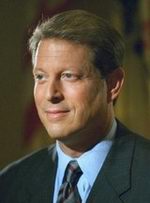
Follow the link below to a very good article by one of the Guardian's top writers, Jonathon Freedland, interviewing a previously ridiculed US Democrat - American comedian Bill Maher said he ran in the 2000 campaign "on a platform of ending charisma as we know it" - who is very suddenly back in vogue as a presidential candidate for 2008.
http://www.guardian.co.uk/climatechange/story/0,,1786438,00.html
Saturday, 17 June 2006
Abolish full-fee places…and raise HECS
Universities need money. To be world-class, as the University of Melbourne aspires to be, requires lots of money. And government is steadily decreasing the amount of money it supplies. That means, inevitably, this shortfall will have to be filled, at least in part, by the students who attend.
I see nothing particularly evil about this. Why should education be free, or even cheap? Education sets you up in life: most courses more or less guarantee you a relatively prosperous career path. And the fact that in Australia, students are not charged while they are studying and hence impoverished, but take on a no-interest loan until they are earning enough to pay it back, sweetens the deal further.
But it’s simply wrong to lower academic standards to get money, as is the current situation. Students, international and domestic, with lots of up-front cash, can get into uni with lower qualifications than those with more smarts but less money.
I say, all remaining hold-outs should reach the conclusion that the basic formula, of students having to pay their university more money to ensure its quality, is the only realistic one. But instead of a double-standard of entry to unis, a more equitable solution is to progressively phase out full-fee places, while significantly raising HECS fees - doubling or tripling them, probably - to make up the shortfall.
I see nothing particularly evil about this. Why should education be free, or even cheap? Education sets you up in life: most courses more or less guarantee you a relatively prosperous career path. And the fact that in Australia, students are not charged while they are studying and hence impoverished, but take on a no-interest loan until they are earning enough to pay it back, sweetens the deal further.
But it’s simply wrong to lower academic standards to get money, as is the current situation. Students, international and domestic, with lots of up-front cash, can get into uni with lower qualifications than those with more smarts but less money.
I say, all remaining hold-outs should reach the conclusion that the basic formula, of students having to pay their university more money to ensure its quality, is the only realistic one. But instead of a double-standard of entry to unis, a more equitable solution is to progressively phase out full-fee places, while significantly raising HECS fees - doubling or tripling them, probably - to make up the shortfall.
Affirmative action for public schools?
I don’t actually agree with the Labor Party that funding for private schools should be slashed and put into public schools. It’s reasonable to think government schools need more money – very reasonable – but this should come from elsewhere in the coffers. The only immediate effect of taking funding away from independent schools would be to cause their fees to rise, and so drive away everyone except the rich. The only major effective change, then, would be to make some worse off without making anybody much better off, as there’d be no real improvement in school quality from the cash redistribution in the short term.
For a better way of redressing the ugly imbalance that is a two-tiered school system, why not affirmative action for government schools? Defenders of private schools and the taxpayer money that sustains them are always banging on about how parents who make the private ‘choice’ are not actually trying to buy a high ENTER score. They say it’s much more than that: better facilities, better students and staff, and, of course, ‘values’. Well, let’s test it. Let’s start adding, say, five, even ten percent to the ENTERs of students from government schools, as a way of addressing the obvious inequality, fixing the skewed entry to uni, without reducing the (supposed) quality of private school education.
It wouldn’t damage the goal of a meritocratic education system, either. The old analogy comes to mind about two sports players, one fully fit, the other recovering from illness, and both seem relatively even in ability at training. The coach, having to pick a single player for the upcoming season, chooses the one not fully fit – the one with potential to get better.
For a better way of redressing the ugly imbalance that is a two-tiered school system, why not affirmative action for government schools? Defenders of private schools and the taxpayer money that sustains them are always banging on about how parents who make the private ‘choice’ are not actually trying to buy a high ENTER score. They say it’s much more than that: better facilities, better students and staff, and, of course, ‘values’. Well, let’s test it. Let’s start adding, say, five, even ten percent to the ENTERs of students from government schools, as a way of addressing the obvious inequality, fixing the skewed entry to uni, without reducing the (supposed) quality of private school education.
It wouldn’t damage the goal of a meritocratic education system, either. The old analogy comes to mind about two sports players, one fully fit, the other recovering from illness, and both seem relatively even in ability at training. The coach, having to pick a single player for the upcoming season, chooses the one not fully fit – the one with potential to get better.
Tuesday, 13 June 2006
The Taiwan Strait War, 2013
Fast-forward to June, 2013. Consider the following sequence of events -
Next to the potential consequences of this war, the threat posed by Islamic extremism pales into insignificance.
The Republic of China's president, a DPP independence hawk with a legislative majority, announces his intention to seek a constitutional amendment changing the island's name to the Republic of Taiwan. Despite PRC warnings, the US government's response is watered down to 'non-support', in the face of overwhelming sympathy for Taiwan from Congress and the American public.
Amidst mounting rhetoric from Beijing, two US carrier battlegroups are despatched to the waters east of Taiwan. The ROC government unveils its constitutional changes, which - in another unpleasant surprise for Washington - exclude any part of mainland China from the new republic, amounting to irrevocable rejection of the 'One China' principle. The PLA is mobilised.
With the American media howling 'appeasement', the US president reiterates that an attack on Taiwan is a matter of grave concern for the United States. All Washington's regional allies declare neutrality; Japan and South Korea even deny the US use of military bases on their soil. China's central bank floods the market with US treasuries, sending Wall Street and the US dollar into tailspin. Congress passes a landslide resolution pledging to defend Taiwan.
The PLA occupies Jinmen and Matsu, and in response the two US carriers enter the Strait. China announces a blockade and fires a hundred missiles into Taiwan; the ROC airforce hits back at mainland targets. The penny drops when US and Chinese forces engage. Who shot first remains in doubt, but the Chinese simultaneously launch an electronic warfare offensive, cancelling the traditional US information dominance of the battlefield.
A US carrier goes to the bottom, with almost all hands. The American public cries for blood and US planes join the ROC airforce to plaster targets along China's southeast coast. Both Washington and Beijing put their strategic nuclear forces on maximum alert. Urged to send the B2's against Beijing and Shanghai, the US president blinks at armageddon and calls his Chinese counterpart, who's also getting cold feet. China lifts the blockade and withdraws its forces on a number of conditions, including the resignation of Taiwan's president and the opening of reunification talks. Faced with a threatened US withdrawal, Taipei buckles.
In the aftermath, the US severs diplomatic ties with China and slaps a total ban on commercial intercourse. The US and the world economy suffer, but not as much as China, which for a while looks ready to descend into chaos. But the Communist Party clings on and settles in for a new cold war across the Pacific, which three decades later is still going strong. After a decade of talks, Taiwan joins China in a loose confederation.
A US carrier goes to the bottom, with almost all hands. The American public cries for blood and US planes join the ROC airforce to plaster targets along China's southeast coast. Both Washington and Beijing put their strategic nuclear forces on maximum alert. Urged to send the B2's against Beijing and Shanghai, the US president blinks at armageddon and calls his Chinese counterpart, who's also getting cold feet. China lifts the blockade and withdraws its forces on a number of conditions, including the resignation of Taiwan's president and the opening of reunification talks. Faced with a threatened US withdrawal, Taipei buckles.
In the aftermath, the US severs diplomatic ties with China and slaps a total ban on commercial intercourse. The US and the world economy suffer, but not as much as China, which for a while looks ready to descend into chaos. But the Communist Party clings on and settles in for a new cold war across the Pacific, which three decades later is still going strong. After a decade of talks, Taiwan joins China in a loose confederation.
At this point I should confess that this cheerful scenario isn't my own work, but a summary of the second chapter in America's Coming War with China. It does happen to tally almost exactly with an essay I wrote last year on the ominous trends in the 'Taiwan problem'. Unless some serious political lifting is done, we're more likely than not to have a war in the Strait within the next ten years.
It's high time that someone with foreign policy credentials spotlighted this issue, in the form of an accessible read. So kudos to America's Coming War With China, even if in other bits it shows up the incapacity of Western commentators to get basic China facts straight. Memo to Mr. Carpenter: it wasn't the Ming dynasty which occupied Taiwan in 1661.
That lifting needs to come from both sides of the Pacific. At a general level the whole power structure of the Asia-Pacific needs a makeover, as I argued a while back on this blog, if Sino-US conflict is to be averted. On Taiwan specifically, the US needs to junk 'strategic ambiguity' in favour of a tougher stance towards the governments on both sides of the Strait. The key elements of the above scenario are Beijing's readiness to attack Taiwan upon a decisive bid for independence, and Washington's failure to preempt such a bid or squash it the moment it happens (as happened to Taipei's nuclear program). A clearer US commitment to the status quo wouldn't guarantee against this situation, but it would help.
It's high time that someone with foreign policy credentials spotlighted this issue, in the form of an accessible read. So kudos to America's Coming War With China, even if in other bits it shows up the incapacity of Western commentators to get basic China facts straight. Memo to Mr. Carpenter: it wasn't the Ming dynasty which occupied Taiwan in 1661.
Scoff at this scenario if you like, but recall that September 11 was unthinkable before it happened. (Whether some people foresaw the use of passenger jets as weapons of terrorism is besides the point). By contrast, analysts have been warning for the better part of a decade - Carpenter's book was published in 2001 - that the 'Taiwan problem' is heading towards a violent resolution. We even had a dress rehearsal in the form of the 1996 Straits Crisis, which played out along similar lines to Carpenter's scenario. Since then the PRC's military position has strengthened, vis-a-vis the US and especially the Republic of China, which has elected a president who rejects the basic principle underpinning Beijing's approach to the problem.
And yet we're sill waiting for some creative thinking in Washington about management of the Taiwan issue and relations with the PRC more generally. Instead we've got a 'China Threat' literary industry, long on hysteria and short on knowledge of contemporary China, let alone the country's history and long-term prospects. At the official level we now have a US strategy for 'full-spectrum dominance' and the cleansing of terrorism from the earth, into which China is expected to fit meekly. The issue of Taiwan's independence gets once sentence, and it doesn't offer concessions to Beijing.
Next to the potential consequences of this war, the threat posed by Islamic extremism pales into insignificance.
Sunday, 21 May 2006
The Red Shadow of the Past
The Communist Party of China is big on anniversaries. When I visited Bejing in 1999, half the city was locked down after 7pm to allow dress rehearsals for the PRC's golden jubilee. China's tumultous history for the first half of the 20th century provides lots of nation-building material - the May Fourth Movement, the Nanchang Uprising, the Liberation itself - all suitably commemorated with flag-waving children, goosestepping soldiers and overdecorated floats.
After 1949, the anniversaries stop. So this Thursday is likely to pass quietly, notwithstanding that it marks forty years to the day when a Peking University lecturer kicked off the Cultural Revolution. Nie Yuanzi was a radical forty-five year old when she stuck up her 'big character poster' denouncing the university authorities. She's now a pensionless eighty-five year old who shares a borrowed apartment with her pet cats and her memories, sharpened by seventeen years in prison; a victim of the monster she helped unleash.
China must have a dialogue about the Cultural Revolution, says Nie, who was one of the Five Leading Red Guards but fell from grace when the political winds shifted in 1968. The reason is less therapeutic than prescriptive, to avoid a repeat catastrophe springing from a flawed understanding of history. One gets the impression that those scarred personally are past the need for reconciliation; the scattered but growing number of voices calling for a national debate talk about the future, as much as the past.
Certainly the responses one gets from people who lived through the "Ten Years of Chaos" remain laconic, even casual. Like a tutor of mine recounting how as a child she watched her father (a university lecturer) paraded through the streets in a dunce cap past baying mobs. Or a friend's father making off-hand references to his years as a teenage 'barefoot doctor' in one of the hundreds of rural counties that the Red Guard generation was exiled to from 1969, in an attempt to expiate the madness.
Certainly the responses one gets from people who lived through the "Ten Years of Chaos" remain laconic, even casual. Like a tutor of mine recounting how as a child she watched her father (a university lecturer) paraded through the streets in a dunce cap past baying mobs. Or a friend's father making off-hand references to his years as a teenage 'barefoot doctor' in one of the hundreds of rural counties that the Red Guard generation was exiled to from 1969, in an attempt to expiate the madness.
On top of the human cost, there's a need to confront the most comprehensive effort yet seen to destroy a nation's cultural heritage. I remember admiring the coffin of an Empress at the Ming tombs outside Beijing, complete with an apologetic sign explaining that it's a replica, the original having received the attention of axe-wielding Red Guards during the swinging sixties. Left-leaning western college students may still find the mass mobilisation and ideological fervour inspiring; Chinese intellectuals view it the same way that cultured Germans view the Nazi rallies at Munich.
But within China itself, the subject remains taboo. As far as the Party's concerned the matter was closed on June 27, 1981, with the Central Committee resolution pinning the blame on Chairman Mao and the counterrevolutionary clique behind him. Nie's is one of the few voices to penerate the blanket of censorship that still lies across the country, smothering even the one private museum dedicated to the Cultural Revolution.
The root problem is that reevaluating the Cultural Revolution means reevaluating the role of Mao Zedong - and by extension that of the Communist Party - in the nation's history. China has yet to go through an equivalent of Russia's de-Stalinisation process. Instead the verdict on the Great Helmsman remains frozen in Deng Xiaoping's 70-30 formula: 70 per cent right, 30 per cent wrong. An honest discussion about the historical black hole from 1966-76 would open a pandora's box, one that the Party has tried to keep shut with the weight of economic growth.
So this is just another instance of the CCP's propensity to sweep its problems under the carpet of history, if necessary by waiting for the main protagonists to die. Last year saw the exit of both Zhao Ziyang and Zhang Chunqiao, the last survivor of the Gang of Four. Neither the baggage of the Cultural Revolution nor that from the June 4th Incident seems to have impeded China's headlong rush to modernity; one of Zhao's proteges even happens to be Premier, while the memorabilia of Mao's personality cult now furnishes trendy cafes. But faced with the mounting contradictions of marketisation within the framework of a Party-State, China's leaders may eventually find that the cherished goal of national stability requires them to use history as a mirror, a lesson they readily dispense to China's neighbours.
As was observed about another national cataclysm, one that festered for a hundred years after the violence ceased:
"The past isn't dead. It's not even past".
(cross-posted)
Wednesday, 10 May 2006
Meet the 2006-7 PIS Committee
Thanks to all those who turned for the club AGM this arvo. And congratulations to the new committee on their election:
President - David Fettling
Secretary - Michael Crozier
Treasurer - Stephen Bain
Speakers Officer - Charlie Goodman
Social Secretary - Sophie Wilson
Publications Editor - Aditi Gorur
Publicity Officer - Lutz Golbs
Don't miss the biscuit-tin swearing-in ceremony next Wednesday.
President - David Fettling
Secretary - Michael Crozier
Treasurer - Stephen Bain
Speakers Officer - Charlie Goodman
Social Secretary - Sophie Wilson
Publications Editor - Aditi Gorur
Publicity Officer - Lutz Golbs
Don't miss the biscuit-tin swearing-in ceremony next Wednesday.
Sunday, 7 May 2006
Standard minimum sentences, anyone?
MUDS are having a public debate on Thursday, and it promises to be interesting:
Click here for more info.
Public Debate 2006
In the lead up to the Victorian State election, the Melbourne University Debating Society proudly invites you to a debate on a central election issue...
Come and hear expert speakers talk about Law & Order and sentencing issues of the Victorian criminal system.
If you do the crime, you should do the time....
That we should have standard minimum sentences for criminal offences.
Speaking for the Affirmative
Mr Peter Ryan, MP
Leader of the Victorian National Party
Shadow Attorney-General
Dr Kevin Donnelly
Former Chief of Staff to Kevin Andrews, MP
Speaking for the Negative
Mr Ian Gray
Chief Magistrate of Victoria
Ms Jenny Mikakos, MP
Victorian Parliamentary Secretary for Justice
Time: 7:30pm
Date: Thursday 11th May, 2006
Place: G08, Law School, University of Melbourne
The debate will be followed by a light supper.
Click here for more info.
Subscribe to:
Posts (Atom)